

Push-ups are a simple exercise, but they can lead to shoulder pain when something is not working the way it should. If you feel pain during or after a set, it is worth slowing down and taking a closer look. In most cases, the issue can be corrected with the right approach.
Why Push-Ups Can Hurt Your Shoulder
Your shoulder joint allows a wide range of motion, but that also means it depends on good muscle control and proper positioning.
Common causes include:
Poor Form
When elbows flare too wide or your shoulders roll forward, it places stress on the front of the shoulder.
Weak Support Muscles
The muscles around your shoulder blade help keep the joint stable. If they are weak, your shoulder has to do more work.
Tight Chest and Front Shoulder Muscles
Tightness in the front of your body pulls your shoulders forward and limits good movement.
Doing Too Much Too Soon
High reps or daily push-ups without rest can irritate the joint.
Old Injuries
Previous strains or tears can show up again if the shoulder has not regained full strength.
A Closer Look at Shoulder Mechanics
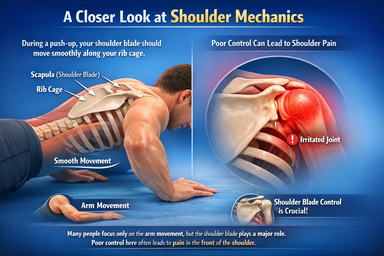
During a push-up, your shoulder blade should move smoothly along your rib cage. This is called control of the shoulder blade. If that movement is off, the joint can become irritated.
Many people focus only on the arm movement, but the shoulder blade plays a major role. Poor control here often leads to pain in the front of the shoulder.
Signs You Should Not Ignore
Some discomfort can be normal when you are starting a new routine, but certain symptoms are warning signs:
Physical therapy may include:
- Sharp or pinching pain
- Pain that lingers after your workout
- Clicking or grinding sensations
- Weakness when pushing
- Pain when lifting your arm overhead
If you notice these, it is best to stop and address the issue before it gets worse.
How to Fix Shoulder Pain from Push-Ups
1. Adjust Your Form
- Keep your elbows closer to your body instead of flaring out.
- Maintain a straight line from head to heels.
- Lower yourself in a controlled way and avoid dropping too fast.
2. Try Different Hand Positions
A slight change in hand placement can reduce stress on the shoulder. Some people feel better with hands a bit wider or slightly turned outward.
3. Use Modified Push-Ups
Start with:
- Wall push-ups
- Incline push-ups on a bench
- Knee push-ups
4. Strengthen the Right Muscles
Focus on:
- Upper back muscles
- Rotator cuff muscles
- Core stability
Simple exercises like rows, light band work, and controlled shoulder movements can make a big difference.
5. Improve Shoulder Blade Control
Practice movements where you gently push your upper back up at the top of a push-up. This helps train proper shoulder blade motion.
6. Stretch Tight Areas
Stretch your chest and front shoulders regularly. This helps bring your shoulders back into a better position.
Exercises That Can Help
Before returning to full push-ups, try adding these:
- Band pull-aparts
- Wall slides
- Scapular push-ups
- Light dumbbell external rotations
These build a strong base and reduce strain on your shoulder.
Common Mistakes to Avoid
Before returning to full push-ups, try adding these:
- Letting your hips sag or rise too high
- Dropping your head forward
- Rushing through reps
- Ignoring early signs of pain
- Jumping back into full push-ups too quickly
Taking your time with proper form is more important than doing more reps.
When to See a Physical Therapist
If your pain continues for more than a couple of weeks, or if it limits your daily activity, it is time to get help.
At Specialized Spine Care in St. Cloud, MN, we take a full-body approach. Shoulder pain is often linked to posture, movement habits, and muscle balance.
We can help you:
- Identify the root cause of your pain
- Improve how your shoulder moves
- Build strength safely
- Return to exercise with confidence
Preventing Shoulder Pain in the Future
Once your pain improves, it is important to keep your shoulders healthy.
- Warm up before workouts
- Keep a balance between pushing and pulling exercises
- Do not skip rest days
- Keep working on posture and mobility
- Progress slowly when increasing reps or intensity
Final Thoughts
Push-ups are a great exercise, but they should not cause shoulder pain. Most problems come down to form, strength, or muscle balance.
If you take the time to fix those areas, you can get back to doing push-ups without discomfort. If the pain does not improve, getting the right help early can save you from a longer recovery later.