Many people feel unsure about what to wear when they come in for physical therapy. It might seem like a small detail, yet the right clothing helps you move with freedom, stay comfortable during your session, and get the most benefit from the exercises your therapist prepares for you. The idea is not about style. It is about choosing clothing that lets your therapist work with you without restrictions and allows your body to move safely.
This guide explains what to wear, what to avoid, and how to prepare for different types of therapy. It is written with everyday situations in mind, so you can walk through the door feeling ready for a productive appointment.
Choose Comfortable Clothing That Moves With You
The best workout clothing is usually the best choice for physical therapy. Soft tops, loose shorts, or stretchable pants help you move without feeling restricted. Your therapist will ask you to reach, bend, stretch, and sometimes lie on the treatment table. Clothing that pulls tightly or blocks movement slows this process down.
Many patients prefer simple gym clothes like a T-shirt and athletic shorts. Others wear light sweatpants or leggings. You do not need special gear. You only need clothing that does not distract you or limit the work you need to do.
If your session involves work on your legs, hips, or lower back, shorts or flexible pants make it easier for your therapist to guide your joints. If your shoulder, neck, or upper back needs attention, a loose shirt or tank top helps during evaluation and hands on treatment. Read about What is a red flag in physical therapy
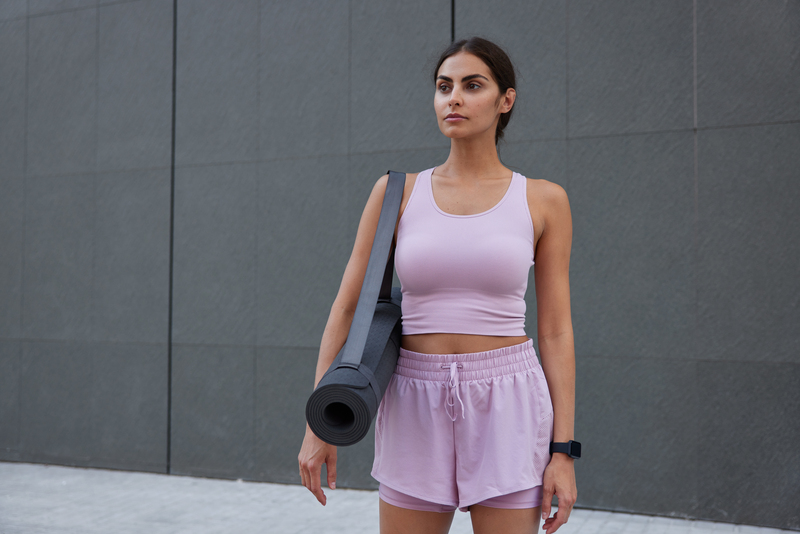
Horizontal shot of motivated slim woman dressed in sportswear prepares for hard training poses with fitness mat focused into distance poses against grey wall with mock up space for your text
Think About Your Specific Injury
Your clothing should match the area of the body that needs attention. This helps your therapist see how the joint moves and gives space for manual therapy.
If you are coming for shoulder therapy, choose a sleeveless top or a loose short sleeved shirt. If your knee or ankle needs treatment, shorts work well. If you prefer long pants, pick a pair that can be rolled up above the knee without feeling tight.
People with back pain often prefer clothing that sits comfortably at the waist without digging in. Elastic waistbands help. A stiff belt or heavy jeans usually get in the way during bending and stretching.
The more clearly your therapist can observe your posture and movement patterns, the better your results tend to be.
Pick Supportive and Stable Footwear
Footwear plays a larger role than many expect. Most therapy sessions involve standing exercises, balance tasks, and walking practice. You need shoes that support your feet without slipping.
Choose athletic shoes with a firm sole and a secure fit. Avoid sandals, heels, or loose slip on shoes. If you use orthotics, bring them to your appointment. They help your therapist understand how your feet and legs align during movement.
Some sessions may involve exercises on soft mats or on specialized balance equipment. A good pair of shoes improves your stability, which helps you move confidently.
Avoid Clothing That Restricts Movement
Some clothing works against you during therapy. Jeans often feel stiff around the hips and knees. Skirts and dresses limit movement and make certain exercises difficult. Heavy layers can warm you too quickly while you work. Jewelry, belts, and large accessories can get in the way when you lie on your side or back.
Your goal is to choose simple, practical clothing that lets you move freely in any direction without adjusting your outfit every few minutes.
Consider Layers for Temperature Changes
Therapy clinics vary in temperature, and your body temperature changes during activity. A light jacket or hoodie that you can remove once you warm up is useful. Beginning your session feeling comfortable helps you focus better on your exercises.
If you tend to sweat easily, bring a small towel. This is optional, yet some patients find it helpful, especially during more active sessions.
Plan Ahead for Your First Visit
Your first appointment often includes movement tests, strength checks, and posture evaluations. Prepare for a wider range of motion than you might expect. It helps to bring shorts if your therapist needs a clear view of your knees or hips. If you are unsure, you can always bring an extra pair of clothes in a small bag.
If you use a brace, splint, or compression sleeve, wear it to your appointment. These items give your therapist important information about your daily movement and support needs.
Comfort is not only physical. Many people feel more relaxed when they wear clothing they trust. Choose clothes that help you feel confident. When you feel at ease, you can focus on learning each exercise and understanding how to manage your recovery.
A Good Outfit Helps You Get Better Faster
The right clothing makes your session smoother and allows your therapist to guide your movement without difficulty. It also helps you practice your exercises correctly, which is one of the most important parts of physical therapy.
Pick comfortable clothing that stretches with you. Wear supportive shoes. Match your outfit to the body area you are working on, and bring layers in case you warm up. These simple steps help you get the most out of every visit and support steady progress toward healing. If you ever feel unsure about what to wear, your therapist can offer quick guidance based on your treatment plan.
The main four types are Orthopedic physical therapy, Neurological physical therapy, Cardiovascular and Pulmonary Physical Therapy, Pediatric physical therapy. Physical