
This is a common part of the healing process, especially when recovering from an injury or surgery.
Many people expect to feel immediate relief after a physical therapy session. So it can be surprising when your body feels sore or even painful later that day or the next morning. If this has happened to you, you are not alone.. Understanding why soreness happens can help you manage it and continue therapy safely.
Pain Doesn’t Always Mean Something Is Wrong
Feeling sore after therapy does not automatically mean the treatment is harmful. In fact, mild to moderate discomfort often indicates your muscles, joints, and connective tissue are being challenged in ways that promote healing. Your body is adjusting, rebuilding strength, and learning how to move correctly. While it can feel discouraging, temporary soreness is usually a sign that your therapy is working.
Common Reasons for Post-Therapy Soreness
1. Muscles Are Being Used in New Ways
Therapy exercises often target weak or underused muscles. When muscles are activated in new ways, tiny micro-tears can occur in the fibers. This triggers soreness as your muscles repair themselves, similar to the feeling after a new workout. This type of discomfort typically peaks within 24 hours and can last a day or two.
2. Healing Tissues Are Sensitive
If your therapy is for an injury, your body may still be in the recovery phase. Tendons, ligaments, and joints can remain tender, and even gentle exercise may cause temporary discomfort. Think of it as gently waking up tissues that have been protecting themselves.
3. Joints Are Regaining Mobility
Stiff joints are common after injury, surgery, or long periods of inactivity. Therapy stretches and movements help restore flexibility and function. Initially, these movements can feel uncomfortable or even slightly painful, especially in areas like the shoulder, knee, or lower back. Over time, improved motion generally reduces soreness.
4. Small Muscle Strains Are Normal
When muscles work harder than usual, small strains can occur. This is a normal part of strengthening and rebuilding. These tiny injuries heal quickly, making your muscles stronger and more resilient.
5. Mild Inflammation Supports Healing
Physical therapy increases blood flow to the affected areas, helping tissue repair. This can cause temporary swelling or soreness. While it may feel uncomfortable, this inflammation is part of your body’s natural healing process.

How Long Should the Pain Last?
Normal soreness is usually mild to moderate and improves within one to three days. It should feel like the muscle fatigue you get after exercising, rather than sharp, stabbing, or worsening pain. Consistent improvement is a good sign that your therapy is effective.
Persistent, severe, or increasing pain is not normal and should be discussed with your therapist promptly.
Tips to Reduce Post-Therapy Soreness
You can take several steps to make recovery more comfortable:
- Use ice or heat: Ice can reduce inflammation during the first day, while heat may help loosen tight muscles.
- Move gently: Light walking, stretching, or slow movements keep blood flowing and reduce stiffness.
- Stay hydrated: Water helps muscles recover and flush out waste products from exercise.
- Follow your home exercise plan: Completing exercises as instructed helps your body adapt and prevents additional soreness over time.
- Rest: Quality sleep and rest periods allow your body to repair and rebuild tissues.
Read about what to wear to physical therapy
When to Reach Out to Your Therapist
While some soreness is expected, contact your therapist if you experience:
- Sharp, stabbing, or worsening pain
- Swelling that persists or worsens
- Pain lasting more than a few days
- Numbness, tingling, or weakness
Your therapist can adjust exercises, intensity, or techniques to keep you on track safely. Read Can sciatica cause calf pain?
Managing Expectations During Recovery
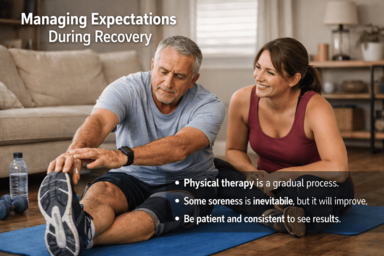
Physical therapy is a gradual process. Your body needs time to rebuild strength, regain mobility, and retrain movement patterns. Some soreness is inevitable, but it should lessen as your body adapts. Being patient and consistent with therapy helps you achieve better results in the long run.
The Positive Side of Post-Therapy Soreness
Feeling sore is often a sign your body is responding to treatment. Muscles are growing stronger, joints are moving more freely, and injured tissues are healing. With time, soreness decreases while strength, flexibility, and overall function improve.
Remember, temporary discomfort does not mean your therapy is failing. It is part of the journey toward recovery, better movement, and less long-term pain. Keeping communication open with your therapist ensures you progress safely and confidently.